
If you’ve ever stared into your fridge thinking,
“I should cook something healthy, but also… I’m tired and everyone eats differently now,”
this one’s for you. Especially if you’re trying to make comfort food a little healthier without cooking five separate meals for everyone’s different needs.
In my last post, I shared how simple healthy ingredient swaps helped me move from guilt and all-or-nothing thinking to something softer: joy, flexibility, and “healthy enough” comfort food. We also built that big Ingredient Swaps table—my personal cheat sheet for making recipes lighter, higher-protein, or more macro-friendly without losing the cozy factor.
Today, I want to show you what happens when that table stops being “nutrition homework” and starts becoming a playground.
This is where kitchen joy, creativity, and connection really kick in.
From “Rules” to Play: Turning Swaps Into a Game
Most of us learned to cook with a lot of invisible rules:
- “Real” mashed potatoes need butter and cream.
- Grandma’s casserole can’t be changed.
- If you’re “on a diet,” you eat something separate and sad in the corner.
The Ingredient Swaps table quietly breaks those rules.
Instead of “you can’t have that,” it says: “Cool, you want comfort food. Let’s see how we can make this work for you.”
When you treat the table like a game board instead of a rule book, a few things happen:
- You start asking, “What can I swap?” instead of “What do I have to give up?”
- You get curious instead of judgmental.
- You realize there are about 17 ways to make the same dish work for different people at the same table.
That shift—from restriction to experimentation—is where joy lives.
One Meal, Many Needs: Using Swaps to Feed Everyone at the Same Table
Here’s the real magic: ingredient swaps aren’t just about macros or calories. They’re about connection.
Most families today have something going on:
- One person is gluten-free.
- One is vegetarian.
- One is counting macros or watching blood sugar.
- One is 7 years old and only eats beige food.
The Ingredient Swaps table gives you a shared starting point—one meal, many variations.

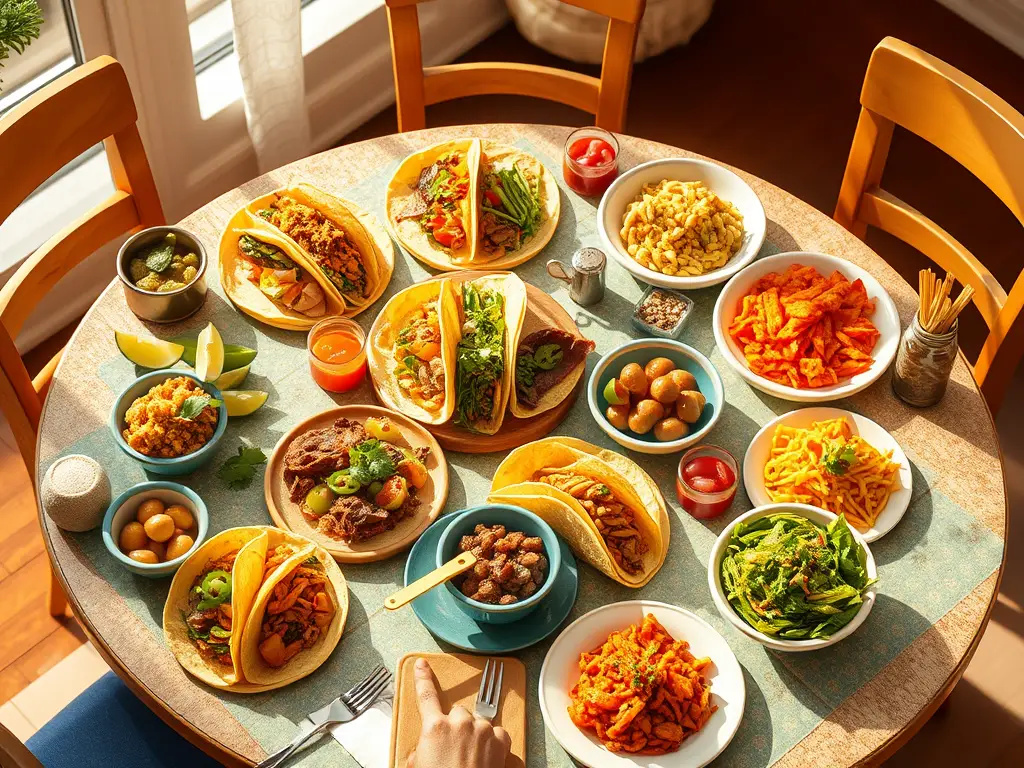
Example: Taco Night, But Make It Inclusive
Take a basic taco night. Using the swaps table, you can:
- Base:
- Regular tortillas for the “I just want tacos” crowd.
- High-fiber or low-carb tortillas for someone watching carbs.
- Lettuce cups for the person who actually likes crunchy lettuce (they exist, I promise).
- Protein:
- Ground beef or turkey for the traditionalists.
- Black beans or lentils for the vegetarian.
- Extra-lean meat + a little broth for someone watching fat.
- Toppings:
- Full-fat cheese and sour cream for those who want it.
- Shredded cheese + Greek yogurt swap for a higher-protein, lower-fat version.
- Extra salsa, pico, and avocado for the “just give me flavor” person.
Same meal. Same table. Different plates that all feel like tacos, not “diet food” vs “real food.”
That’s connection. No one is eating something sad and separate. Everyone’s plate still looks like dinner, not a punishment.
Kitchen Creativity: Using Healthy Ingredient Swaps as Your Idea Generator
If you’re not naturally a “throw things together” cook, creativity in the kitchen can feel… intimidating. The swaps table is your safety net.
Think of it like this:
- Pick a comfort food you love.
Mac and cheese, enchiladas, meatloaf, potato soup—whatever your family actually eats. - Choose one column from the table to play with.
Maybe you start with protein swaps, or fat swaps, or carb swaps. - Change one thing at a time.
Not the entire recipe. Just one ingredient swap. - Taste, adjust, repeat.
If it works, you’ve got a new version. If it doesn’t, you learned something and you still probably have something edible.
A Few “Playful Swap” Prompts
You can literally turn this into a weekly challenge:
- “This week, we’re testing a protein swap in one comfort food.”
- “Next week, we’re trying a sauce or topping swap.”
- “The week after, we’re doing a carb base swap—rice, pasta, tortillas, potatoes.”
Some ideas you can pull straight from the table:
- Swap half the mayo in a salad or dressing for Greek yogurt.
- Swap half the pasta in a casserole for steamed veggies or high-protein pasta.
- Swap regular ground beef for a mix of lean beef + finely chopped mushrooms (extra volume, less fat, more umami).
- Swap heavy cream in a soup for evaporated skim milk or a blend of broth + a little cream cheese.
You’re not reinventing the wheel. You’re just nudging recipes a little closer to your goals while keeping the soul of the dish intact.
Make It Social: Family & Community Kitchen Challenges
Ingredient swaps get even more fun when you’re not doing them alone.
Here are a few ways to turn the table into a connection tool:
1. Family “Swap of the Week”
Pick one row from the table and make it your theme.
- Week 1: “Creamy Swaps” – Try Greek yogurt, light cream cheese, or evaporated milk in one recipe.
- Week 2: “Protein Boost” – Add beans, lentils, or extra lean protein to a comfort dish.
- Week 3: “Carb Remix” – Try a higher-fiber or lower-carb base in one meal.
Let different family members choose the dish:
- One week it’s your kid’s favorite.
- One week it’s your partner’s nostalgic recipe.
- One week it’s your “I need something easy” meal.
Talk about what worked and what didn’t. Let people vote. Make it a thing.
2. Virtual Potluck with Friends
If you’ve got friends or family with different dietary needs, this is a fun way to stay connected:
- Everyone starts with the same base recipe (chili, lasagna, tacos, etc.).
- Each person uses the Ingredient Swaps table to adapt it to their needs.
- You share photos, notes, and “would make again / would not” ratings in a group chat or Zoom.
Same recipe, different solutions. It’s a great reminder that there’s no one “right” way to eat.
3. Tradition Remix
Take a family recipe—something you grew up with—and ask:
“How can we keep the story, but update the ingredients for how we eat now?”
Maybe that means:
- Baking instead of frying.
- Using a lighter sauce.
- Adding protein or fiber.
- Making a gluten-free or dairy-modified version so more people can enjoy it.
You’re not erasing tradition. You’re evolving it so it can come with you.
Joy Isn’t Just in the Food—It’s in the Process
One of the surprising things I’ve learned on my own health journey (hi, neuro-spicy biotech brain + Zepbound + macro math) is that joy in the kitchen doesn’t come from perfection.
It comes from:
- Laughing when a swap doesn’t quite work but is still edible.
- Realizing your kid actually likes the Greek yogurt ranch better.
- Watching someone with a different dietary need feel included instead of “accommodated.”
- Knowing you can adjust a recipe on the fly when your body or your goals change.
The Ingredient Swaps table is just a tool. The real transformation happens when you use it to:
- Remove the guilt.
- Invite curiosity.
- Make space for everyone at the table.
How to Start This Week (Without Overhauling Your Life)
If you’re feeling inspired but also a little overwhelmed, here’s your low-lift starting point:
- Pick one comfort recipe you already make—
Something on regular rotation like tacos, pasta bake, chili, stir-fry, or soup. - Open the Ingredient Swaps table from the last post.
Treat it like a menu of options, not a list of rules. - Choose one swap that feels doable.
Just one. Not five. Not “new me, new kitchen.” One. - Cook it, eat it, and notice.
- Did it still taste like comfort food?
- Did anyone notice? (Sometimes they don’t.)
- Did it make your body feel a little better afterward?
- If it worked, write it down.
Congratulations, you just created your own “House Version” of that recipe—the version that actually fits your life right now.
Repeat that a few times, and suddenly your family’s favorite meals quietly align with your health goals—without a big dramatic overhaul.
Your Turn: Let’s Build a Little Kitchen Joy Together
I’d love to hear how you’re using the Ingredient Swaps table in your own kitchen:
- What’s one comfort food you’d love to make a little lighter, higher-protein, or more macro-friendly—without losing the cozy factor?
- Have you already tried a swap that surprised you (in a good or hilarious way)?
Hit reply if you’re seeing this in your email, drop a comment, or tag me if you share your experiments on the socials—I genuinely want to see what you’re cooking and how you’re adapting it for your life, your body, and your people.
Because at the end of the day, this isn’t about being perfect.
It’s about finding ways to keep the foods you love, invite more people to the table, and make the kitchen a place of joy, creativity, and connection again.
This post supports my pillar of Kitchen Joy, Creativity & Connection. If you try any healthy ingredient swaps from the table—or come up with your own—let me know in the comments! I’d love to hear how you’re adapting your family’s favorite comfort foods so everyone can share the same meal in a way that actually works for your real life.
Leave a Reply