
Real-life routines and gentle resets to keep your family grounded (even when schedules explode).
TL;DR: Holiday chaos is inevitable—but sanity is not a lost cause. Tiny, flexible routines and micro-habits can keep your family grounded, even when your calendar looks like a game of Tetris. This post is packed with real-life strategies, gentle resets, and zero shame for the beautifully imperfect.
This is part four of my Executive Function for Parents & Kids: Holiday Survival Series. Missed the earlier posts? Catch up here.
Inside this article:
Consistency with Ease: Real Life, Not Pinterest
Let’s get real: The holidays are less “magical movie montage” and more “where did I put the tape, and why is there glitter in my coffee?” For those of us juggling neurodivergence, second-act careers, or just the sheer volume of December, perfection is overrated.
Today I’m sharing some of the systems and strategies I personally use to stay sane through the holidays, and every day.
Consistency with ease means showing up for yourself and your loved ones every day—in small, meaningful ways. It’s knowing your priorities, honoring your energy, and forgiving yourself (gasp!) when routines fall apart. Progress over perfection, always.
Micro-Habits That Actually Work (Even When You’re Tired)
These are a few systems we actually use in my household:
- Morning MIT: Each day, pick your Most Important Task and do it first. If all else crumbles, you’ve still nailed your top priority. This is key for mental health, motivation, and momentum.
- Checklist Magic: Gift tracking, holiday meal planning, and “what’s left to wrap?” lists on your phone = fewer surprises and less mental load.
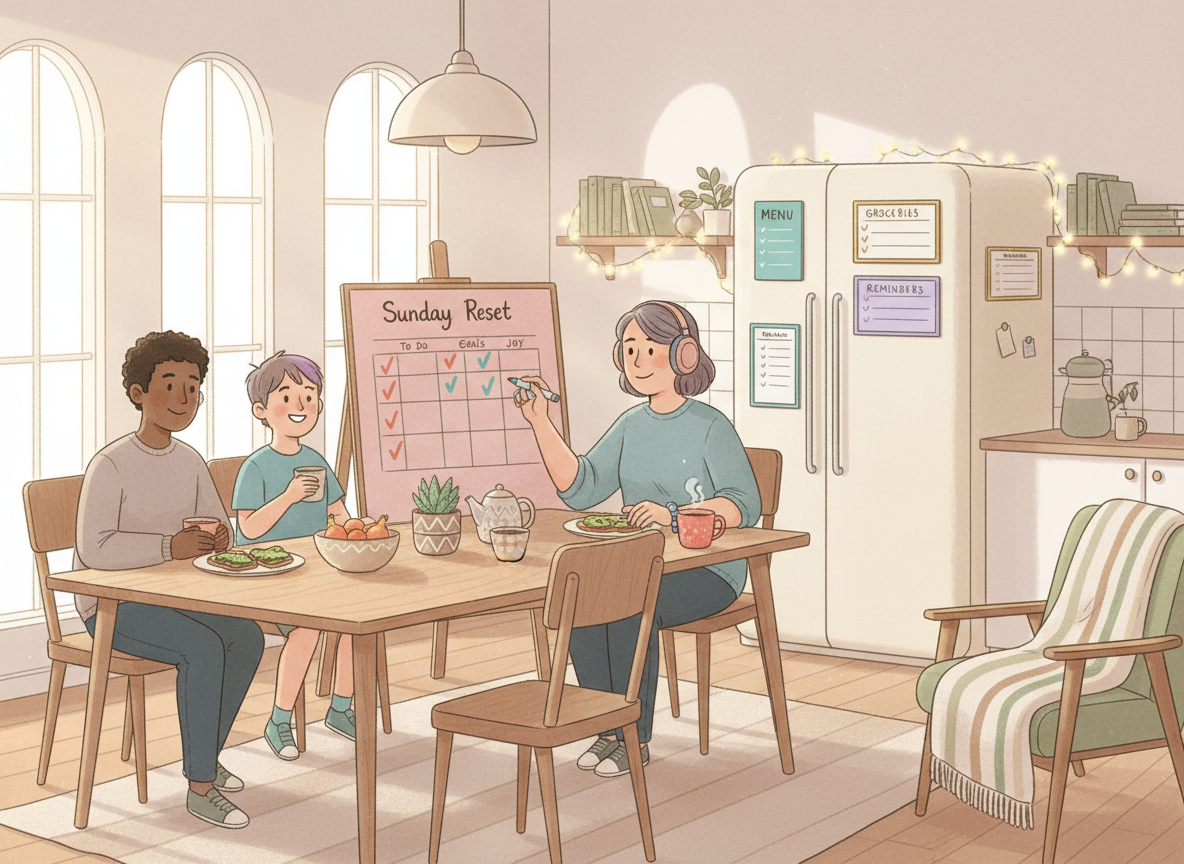
- Sunday Reset Ritual: Meal plan for the week, make a grocery list, and order grocery pickup for Monday. Involve the whole family by asking for meal requests (and get volunteers to cook)—everyone feels seen, and you get fewer complaints.
- Whiteboard Central: Magnetic boards on the fridge for menus, grocery lists, reminders, and healthy snack ideas. Out of sight, out of mind? Not anymore.

But what happens when even the best-laid plans go sideways? Enter the gentle reset…
Gentle Resets & Letting Go (Without the Guilt)
Routines will break down. When they do, remember: Your kids won’t remember the perfect centerpiece, but they will remember family dinner (even if it’s takeout). Give yourself permission to:
- Ask for help—your family is more willing than you think.
- Forgive yourself when you drop a ball (or three).
- Rest instead of quitting. “Learn to rest, not to quit” is one of my mantras for a reason.
Flexibility is the secret ingredient—honor traditions, but don’t be afraid to change things up if it keeps the peace.
Celebrating Small Wins (Because They Matter)
And when you do make progress—no matter how tiny—celebrating it is key to keeping motivation alive.
This week’s win? Booking my first podcast guesting spot. I celebrated by sharing with my family and treating myself to a beauty appointment so I’ll feel my most confident on filming day. In our house, we track progress (I see you, fellow data nerds!) and celebrate every little win, from remembering the backpack to making it through dinner without a meltdown.
What’s yours? Did you or your child nail a micro-habit, bounce back from a setback, or just survive the week? Drop it in the comments—I’d love to celebrate with you.
Tools, Templates, and Family Buy-In
- Assign rooms to be cleaned and rotate dinner duties—flexibility is key, but shared responsibility keeps resentment at bay.
- Use apps for meal planning and shopping lists—decision fatigue, begone!
- Encourage negotiation and support, not shaming, when someone falls behind.
On the Messiest Weeks…
The one thing that keeps me grounded is remembering the reason for the season: family and honoring traditions (even if they look different some years).
My favorite reset? A healthy snack, a cup of tea, and a few minutes in my favorite chair.
The smallest routine that makes the biggest difference? Sitting down together every evening for dinner as a family—no matter what chaos swirls around us.
Try This: Executive Function Self-Assessment
Want to understand your own executive function strengths—and how they shape your routines? Try my Executive Function Self-Assessment. It’s free, quick, and full of “aha” moments.

Coming Up Next
Feeling the holiday guilt creep in? Next up: “You’re Not a Bad Parent; You’re an Overloaded One: Reframing Holiday Guilt Through EF.” Stay tuned for a fresh perspective on letting go of shame and embracing what really matters.
Make sure you’re subscribed so you don’t miss anything.
What’s your favorite tiny routine or micro-habit? Share in the comments—let’s celebrate those real-life wins together!
Progress, not perfection. You’ve got this—and I’m cheering you on.
This post lives inside my Consistency With Ease pillar—making routines doable, embracing micro-habits, and celebrating progress over perfection (especially when life gets loud and messy). Alongside Clarity in Action, Authentic Productivity, and more, Productive AF is here to help you build gentle, sustainable rhythms that support your real family, every season of the year.
Leave a Reply